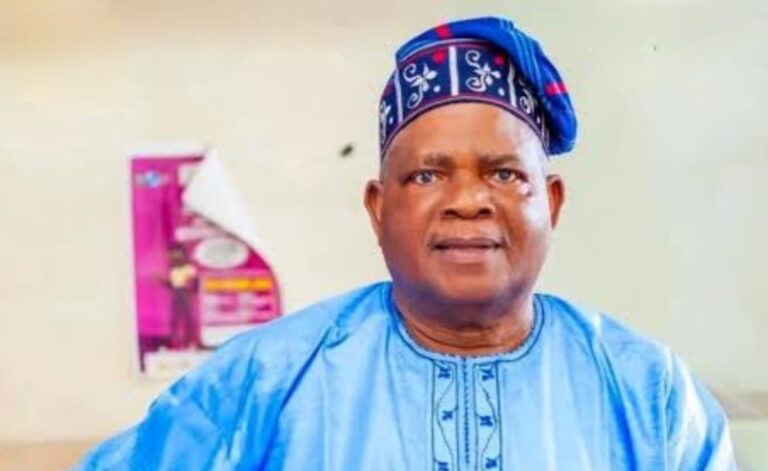
Photo: Prof Kila
Anthony Kila comments on the recent news that the Lagos State Police have declared Omoyele Sowore a wanted man
By Anthony Kila
Every democracy requires its nuisances. Indeed, if Omoyele Sowore did not exist, Nigeria’s democracy would have had to invent him. Sowore is not a menace; he is an irritant boisterous, theatrical, occasionally reckless, yet undeniably valuable. He exemplifies those figures that democratic societies must learn to tolerate and even appreciate, for they serve to keep those in power vigilant and ensure that the flame of freedom remains alive. The recent proclamation by the Lagos State Police Command that Sowore is “wanted for plotting to disrupt peace in Lagos” should, therefore, raise concerns among all who cherish the delicate equilibrium between order and liberty within our society. Not because Sowore is without fault, but because the very fabric of democracy suffers when law enforcement wields the language of criminality and the notion of ‘wanted’ with such levity.
Declaring a citizen as “wanted” should be regarded as an utmost last resort an exceptional measure reserved solely for those who embody a genuine, verifiable threat to public safety: armed robbers, kidnappers, terrorists, or fugitives from justice. Before succumbing to the theatrics of sensational headlines, we must inquire: has the police summoned Sowore for questioning, and has he declined to appear? If so, due process is in place summon, caution, prosecute. In the absence of such steps, any declaration becomes a mere political spectacle rather than genuine law enforcement. It devolves into noise cloaked as legality. While it is undeniably tempting for power structures to neutralise disruptive voices, true responsible policing does not entail silencing; it requires careful management. The grievance of a citizen’s voice should never be mistaken for the threat posed by a criminal act.
Every lively democracy has its Sowore and similar figures; they are individuals who inspire, provoke, and challenge authority in ways that may not always be popular with all. They expand the horizons of free expression and civic engagement. In doing so, they may offend, exaggerate, or, in retrospect, reveal profoundly prophetic truths.
Sowore’s tactics may not always be agreeable to some of us. He can be brash, self-righteous, even tumultuous. Yet, he embodies a vital principle the refusal to accept complacency and conformism. In a nation where indifference has become the prevailing civic attitude, his perseverance acts as an antioxidant for our public life.
In the language of ecology, he is a “necessary irritant” a catalyst that sustains the vitality and oxygenation of the democratic ecosystem. A democracy devoid of its nuisances is, in essence, lifeless. Instead of hunting dissenters, modern police forces around the world study them. They learn from them. They use dialogue, negotiation, and intelligence to manage protest and expression not intimidation.
The Lagos State Police Command has, in fact, done well in recent years compared to its counterparts across the federation. Its success in reducing some categories of violent crime is commendable. That is precisely why it must now show maturity in dealing with civic agitation.
Lagos is not just another state. It is Nigeria’s economic and cultural nerve centre, a city that shapes national tone. How the Lagos police handle dissent, protest, and public expression sends signals to Abuja, Kano, and Port Harcourt. If Lagos police can manage Sowore with wisdom and tact, they will demonstrate that Nigeria’s democracy can be both strong and tolerant.
Let us be clear, the true enemies of peace in Lagos are not activists with megaphones. They are the self-serving touts, thugs, and extortionists who harass ordinary citizens in markets, parks, and motorways — men with no ideology, no civic purpose, and no social interest. They operate daily, unbothered, collecting illegal levies and intimidating the vulnerable. If the Lagos police are seeking worthy targets, they should focus on those areas. Protect consumers, protect commuters, and shield workers, traders, and passengers from the extortion networks that tarnish our public spaces.
Our focus should also be on the highways where kidnapping has crept too close for comfort, and on the syndicates that terrorise homes under the cover of night. The Lagos police can use their experience and relative sophistication to help other states build capacity against armed robbery, kidnapping, and organised theft — crimes that truly “disrupt peace.” That would be a more productive legacy than headlines about activists.
Let me remind everyone that protests, even those that are inconvenient, are not crimes. They are conversations sometimes loud, sometimes angry, but still conversations. A confident State tolerates them. An insecure one suppresses them.
Here are some modern policing tips: the modern strategy for managing protests emphasises proactive dialogue with organisers to establish routes, timings, and guidelines for engagement. It advocates for deploying skilled negotiators rather than deploying forces aimed at intimidation. Maintaining real-time communication between police and civic leaders helps prevent escalation, while transparency with the media fosters accountability on all sides. These approaches are not signs of weakness; rather, they reflect a commitment to professionalism. Ultimately, they transform potential chaos into a display of controlled expression.
There is a kind of osteogenesis issue here; “we live and learn” in the voice of Dr Amos Akingba, Nigeria’s democracy is still learning the art of confidence. Powerful individuals and institutions still mistake criticism for threat and agitation for anarchy. Yet, the strongest governments are those that can tolerate dissent without fear. The measure of strength is not in how swiftly you silence opposition, but how calmly you engage with it. For the Lagos police, this is an opportunity to demonstrate that strength to show that they can manage Sowore’s noise with civility, not coercion. Let us remember: democracy is not about avoiding tension; it is about managing it intelligently.
There is no point in even trying; Sowore will continue to be a nuisance sometimes useful, sometimes excessive. But that is not the point. The issue is that our institutions must be wise enough to distinguish nuisance from threat, activism from crime, and noise from violence. Nigeria does not need fewer nuisances. It needs fewer injustices. The job of the police is not to protect the government from citizens but to protect citizens from harm even when those citizens are inconvenient.
Sowore is not the threat. The real danger is a state too insecure to tolerate the smell of its own democracy.
Anthony Kila is a Jean Monnet Professor of Strategy and Development at the Commonwealth Institute for Advanced and Professional Studies.